
Reblog UI Refresh
Making long reblog chains readable
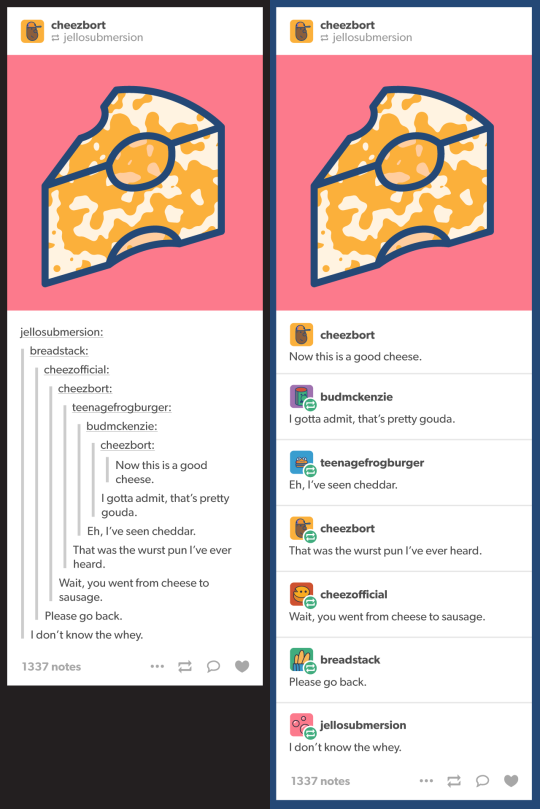
One of Tumblr’s defining features is the reblog chain. However, a reblog chain’s underlying structure, nested blockquotes, made long chains nearly unreadable. On mobile, a popular post could reduce to nothing but a screen full of indentation lines, the actual conversation buried somewhere inside.
The solution was to collapse the nesting into a flat stack: each contributor’s avatar and username above their comment, full-width. It preserved the sequence and attribution that made reblogs meaningful, while reclaiming the space that made them readable. I led the engineering implementation for the website.
Read the staff post On Reblogs and Ever See a Crazy Long Indecipherable Reblog Chain?.
Neue Post Forms (NPF)
Replacing rigid post types with a fluid, block-based canvas
Before NPF, making a post on Tumblr meant picking a type upfront—Photo, Text, Quote, Link, Audio—and working within its rules. Post types limited what you could author.
With Neue Post Form, Tumblr shifted from forcing creators to choose a single, rigid container for their content to providing a more expressive canvas where text and other media can be mixed and rearranged. I contributed to the rollout and maintenance of the new editor across web and Android.
Read the staff post Three new features for posting from the mobile app

Blog View
Letting taste become part of your identity on the platform
A Tumblr blog used to show one thing: your posts. Your likes and followed blogs existed, but were tucked away in an easy-to-miss contextual popover.
The Blog View gave users control over how they presented themselves, optionally surfacing their likes and follows as dedicated tabs on the profile page. I led implementation across web and Android1.
Read the staff post Show off your taste in Tumblr

Footnotes
-
Product engineers during this time were encouraged to work fluidly across platforms. This was part of a broader initiative at Tumblr to have engineers own features end-to-end across platforms rather than handing off between web and mobile teams. ↩